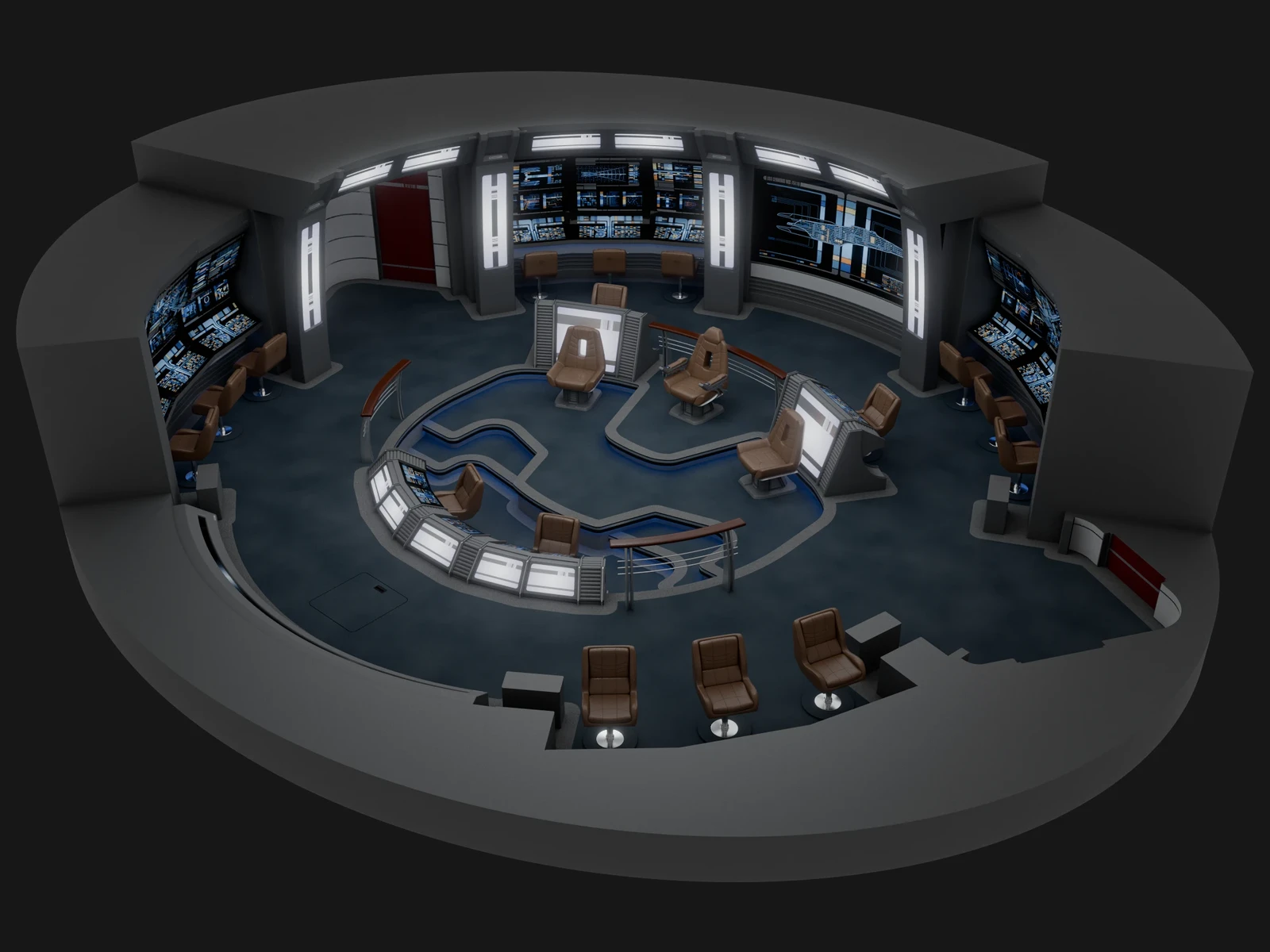
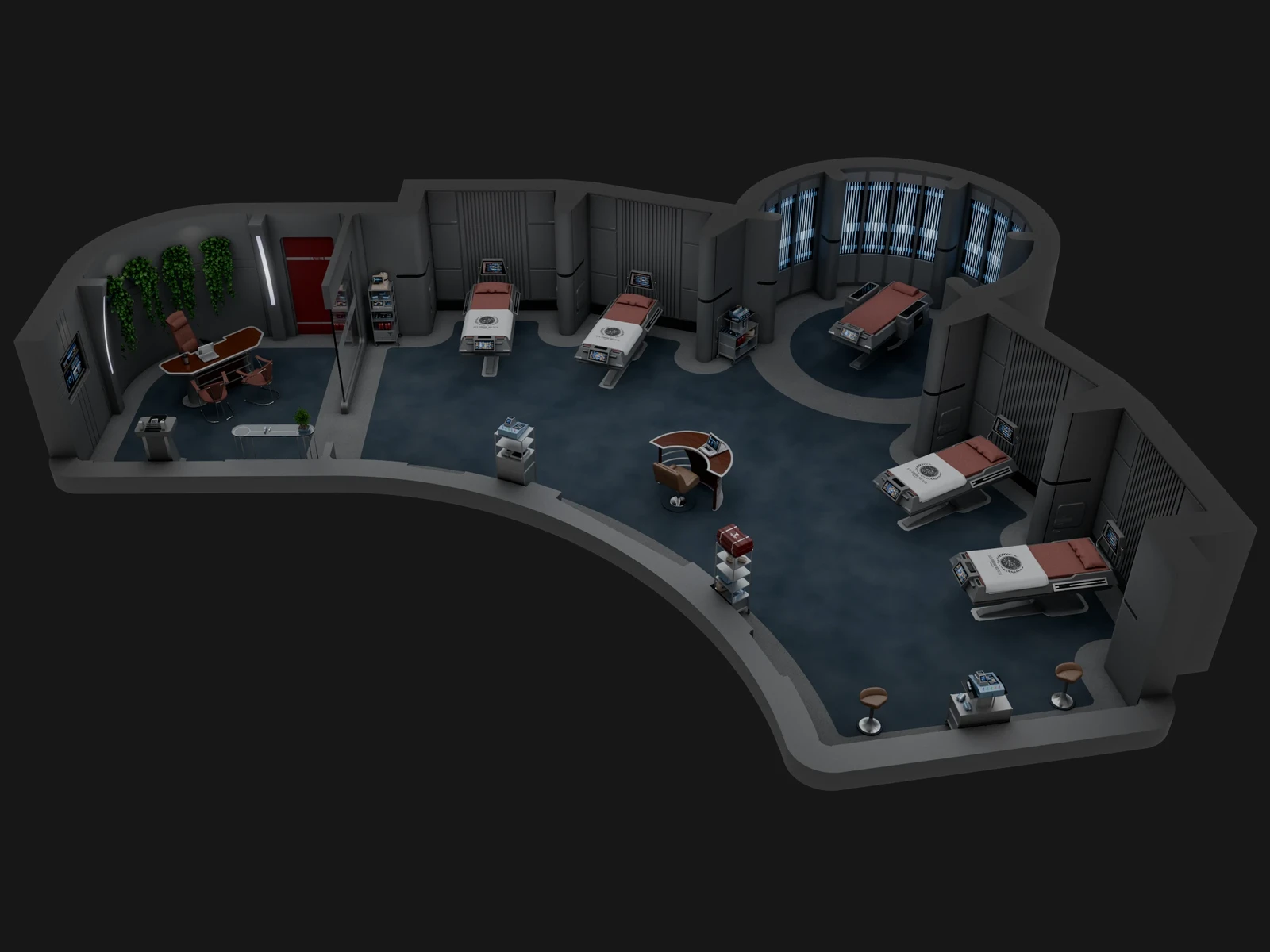
Developed alongside the Defiant and Akira classes as unofficial warships to counteract the Borg threat, Prometheus was intended to separate into three equally capable ships during combat, becoming a force multiplier. Every system on the ship was thus triplicated, as each section had its own warp core, nacelle pair, command bridge, impulse engines, etc.
Because of this never-before tried capability however, the project had an extended development time. The prototype NX-74913 was frequently only able to do short test flights out of the Beta Antares Ship Yards before the power systems failed in one way or another, necessitating the ship be towed back to port.
By mid 2373 however all these issues were resolved, and the prototype was commissioned into the fleet. Its complex production however meant Starfleet never built ships of the class in high numbers, giving more priority to designs like the successful Akira class, which were faster to construct and required less materials.
The Battles against the Borg at Wolf 359 and Sector 001 had showcased to Starfleet Command several flaws in the fleet’s battle readiness and threat response capabilities. One of the main concerns was that early on in both engagements the flagships in command were destroyed, leaving the remaining forces uncoordinated and with a crippled chain of command.
To try and offer a solution to this problem, in late 2373 the already under construction Cerberus was chosen as a test platform to create the most resilient flagship possible, able to withstand heavy barrages of enemy fire and still coordinate fleet movements effectively. The redundancy inherent in the Prometheus-class design; with its four main warp nacelles, three independent computer cores, and six impulse engines, made it a perfect candidate for this role.
The ship still retained the ability to separate its saucer section in an emergency, but the two stardrive sections were permanently interconnected, and its spaceframe was heavily modified to prioritize total hull strength. This ironically made its name somewhat mismatched, as the ship would no longer be able to act as the three independent heads of the mythological creature Cerberus.
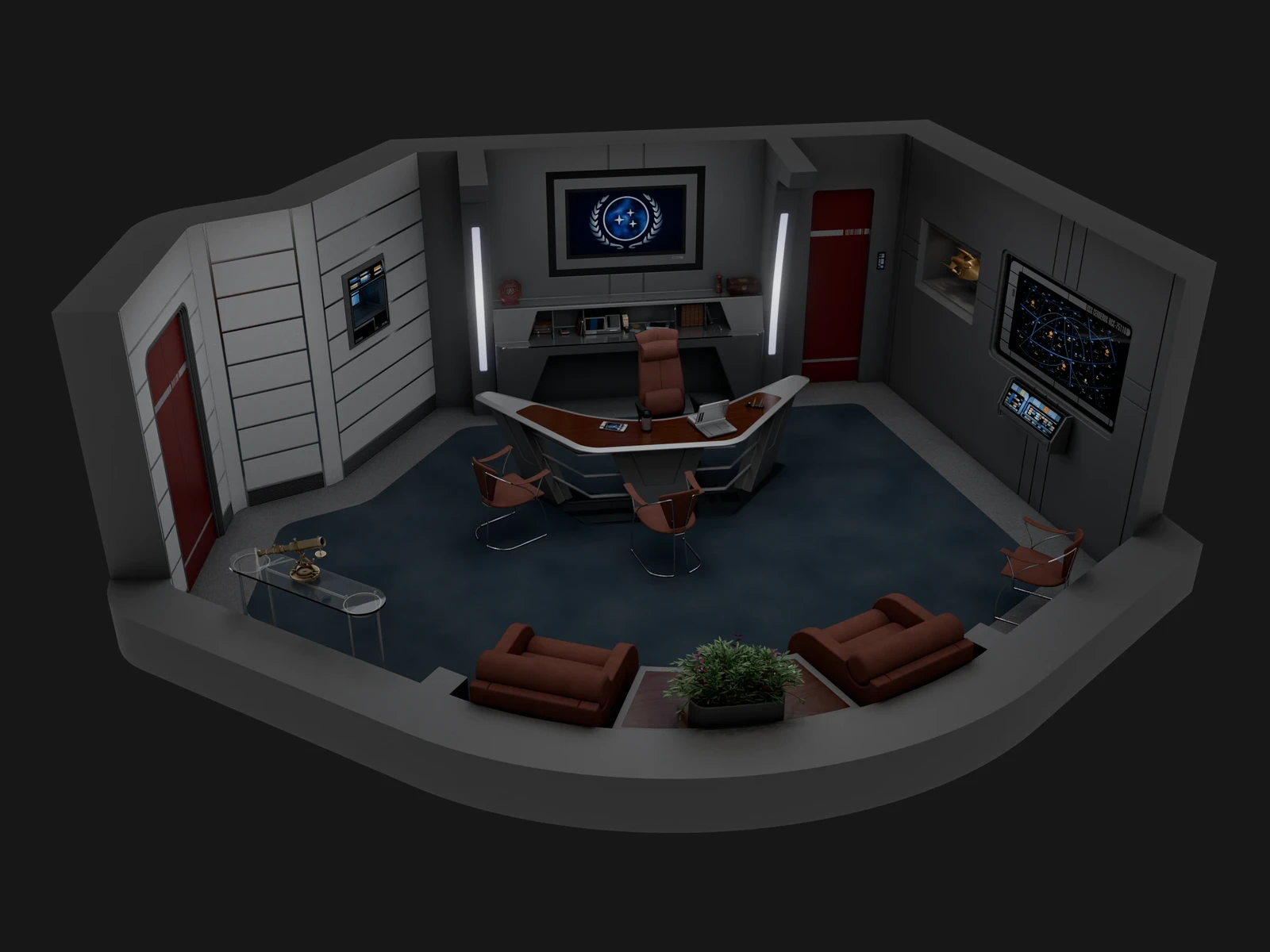
Originally intended to enter service in 2375, delays with the spaceframe modifications pushed the commissioning of Cerberus to 2376, just enough to miss the end of the Dominion War. The vessel became the new flagship for Vice Admiral Ross, and while it didn't see the heavy fighting it was designed to withstand, Cerberus still proved a successful and versatile peacetime flagship for the admiral, showing the flag in many diplomatic missions during the post-war reconstruction of the Alpha Quadrant.
The ship’s motto, inscribed on its dedication plaque, was “Courage is what it takes to stand up and speak; courage is also what it takes to sit down and listen.”